
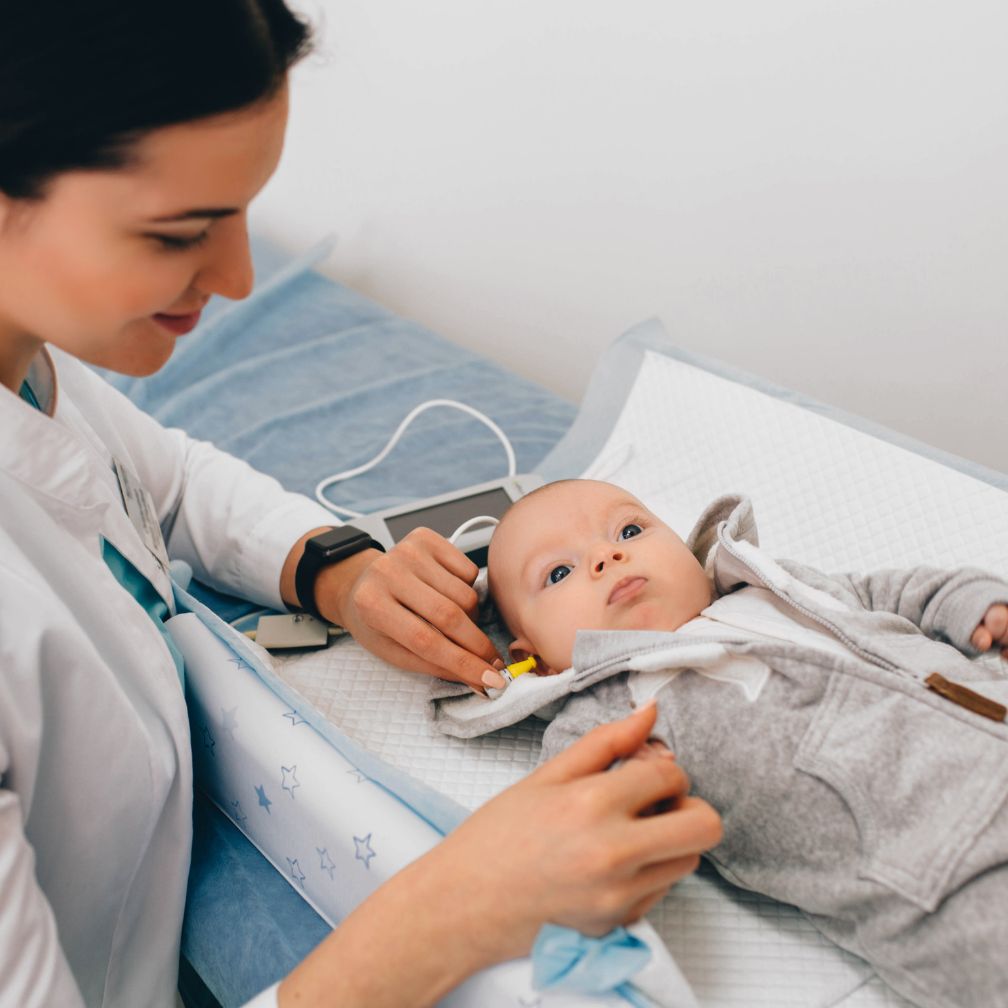
For young parents, discovering that their infant has a hearing loss inevitably feels heartbreaking and frightening. Yet the positive perspective remains that via early care and screening, infants experiencing hearing loss are able to thrive over time. Without doubt, such infants can learn speech, interactive capabilities, and rich relationships across their environment, bringing about a truly fulfilling life!
Integrating standard hearing devices with modern cochlear technology offers two primary clinical solutions for supporting infants who exhibit hearing loss. Further down, our article reviews their functional parameters so you can determine the most suitable choice for your baby.
Unpacking the Foundations of Infant Hearing Loss
Congenital auditory impairment in infants often occurs because of various root causes, such as:
- Underlying genetic predispositions (even without documented familial lineage)
- Primary maternal congenital infections including cytomegalovirus (CMV) or rubella infection
- Intrapartum events, featuring fetal oxygen deprivation or premature emergence
- Specific pharmaceutical treatments deployed inside specialized newborn intensive units
What action holds the highest value? Prompt clinical evaluation. Owing to these factors, infants delivered in United States hospitals complete hearing screens prior to leaving the maternity unit. Clinical pediatric audiology doctors faithfully maintain the standardized “1-3-6” operational timeline:
- Early auditory screening administered within 30 days post-birth
- Complete clinical diagnosis secured prior to 3 months
- Dedicated treatment (utilizing medical units or targeted speech therapy) launched prior to 6 months post-birth
Achieving these critical milestones offers infants their ideal path toward speech, language, and cognitive development. When you need advice on these early screenings, your trusted pediatrician stands ready to assist!
Understanding Amplification Devices for Infants
For babies with mild to severe hearing loss, hearing aids are often the initial treatment approach. Such light, wearable units intensify sound signals, enabling babies to process spoken dialogue and surrounding noise with greater accuracy.
Custom infant-adapted hearing aids act as:
- Thoroughly safe for deployment on babies just a few weeks after birth
- Manufactured with cushioned, comfortable ear molds that adapt as the infant matures
- Furnished with child-resistant battery compartments and dedicated pediatric safety elements
- Professionally configured by a pediatric hearing practitioner to target your child’s distinct hearing prescription
While your infant develops, hearing aids necessitate regular clinical recalibrations to ensure snug placement and precise amplification.
Pediatric Cochlear Implants: An Advanced Solution
When an infant presents with severe to profound sensorineural hearing impairment and derives insufficient benefit from wearable aids, a cochlear implant stands as a primary recommendation. Differing fundamentally from traditional hearing devices, cochlear implants:
- Involve outpatient surgical implantation within the temporal bone delivering direct electrical signals to the brain
- Direct signals past non-functional hair cells inside the cochlea
- Convert sound waves into focused electrical signals that directly excite the acoustic nerve
Pediatric cochlear implant systems remain:
- FDA-approved for infants starting at 9 to 12 months of age
- Uniquely successful when paired with early intervention and dedicated household support
- Sanctioned strictly following a rigorous evaluation process by a certified audiologist and otolaryngologist
This process includes temporal bone imaging, hearing tests, and open dialogue concerning long-term communicative results.
Hearing Aids Versus Cochlear Implants: A Direct Comparison
- Mild to severe hearing loss: Hearing Aids; Severe to profound hearing loss necessitates Cochlear Implants
- Non-Invasive external fitting: Hearing Aids; Invasive surgical procedure: Cochlear Implants
- Acoustic volume boosting: Hearing Aids; Electrical signal stream conversion: Cochlear Implants
- Fitting starts at early infancy: Hearing Aids; Access starts at 9-12 months: Cochlear Implants
Closing Perspective: Choosing Between Hearing Aids and Implants
In the event your infant receives a hearing loss diagnosis, you possess multiple viable options and compassionate guidance. With active assistance from pediatric hearing professionals, a vast majority of children attain speech and language proficiency that rivals their normal-hearing peers.
Whether your baby benefits most from custom hearing aids or a cochlear implant system, early action can make a lifelong difference.
Do you need professional advice regarding your baby’s current hearing health? Call our clinic today to receive a complete diagnostic assessment and personalized rehabilitation plan.