
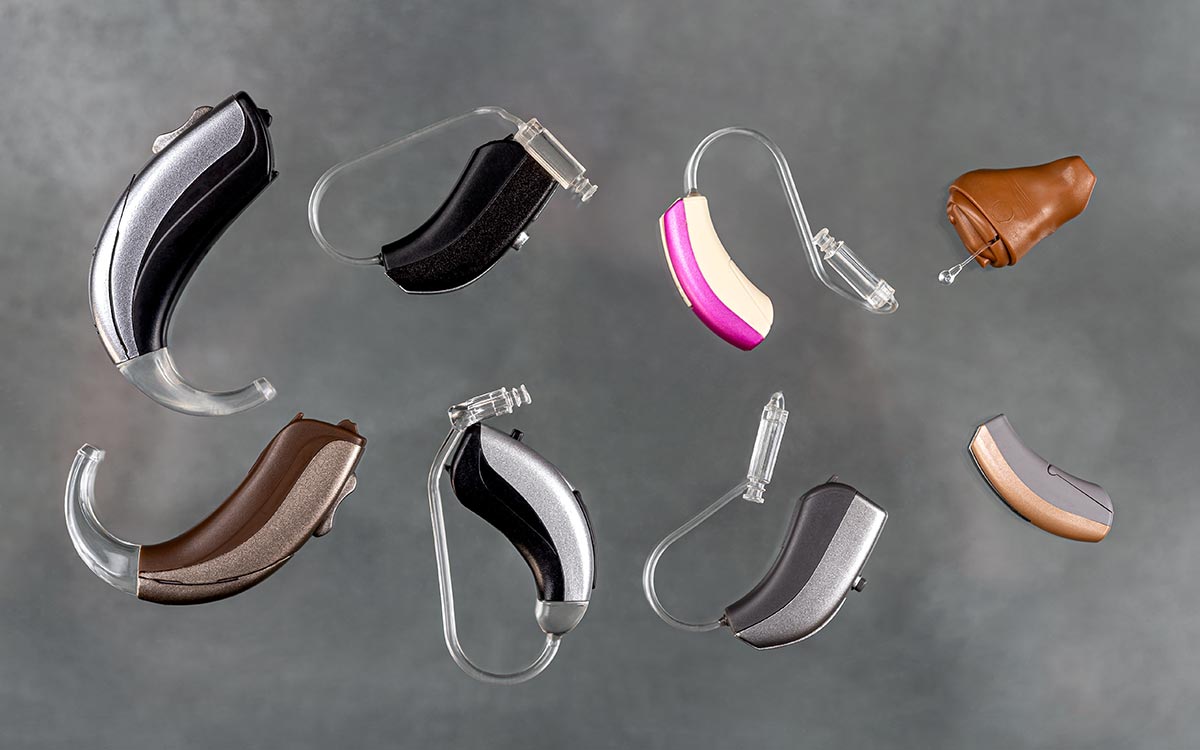
With so many options in terms of dimensions, style, and technology, the process of picking a hearing aid for hearing loss or tinnitus can feel quite intense. Rest assured that there is an assistive device tailored to every lifestyle and degree of impairment. It’s just a matter of locating it!
Understanding the differences among the most common types of hearing aids can help you feel more informed and confident as you explore your options. This guide explores the most common styles and highlights the specific advantages each one offers.
In-the-Canal (ITC) Hearing Aids
The Meaning:
These hearing aids are placed partially inside the canal, making them visible only slightly from the outside.
Key Selling Features:
- Less apparent than standard full-size models
- Specifically shaped to the wearer’s ear for an optimal fit
- Works well for people experiencing mild hearing challenges
First-time wearers frequently gravitate toward ITC aids because they strike a perfect compromise between size and performance.
IIC (Invisible-in-Canal) Engineering
Core Characteristics:
IIC hearing aids are the tiniest custom design available. They are placed deep within the canal to remain hidden from view.
User Pros:
- Highest degree of discretion for the wearer
- Microphone depth assists in mimicking the ear’s natural sound collection
- Designed for ease with a highly small footprint
Because of their tiny stature, IIC devices typically work best for mild to moderate hearing loss and for those who prefer an almost invisible option.
ITE (In-the-Ear) Model Summary
What they are:
ITE hearing aids occupy either the entire outer ear (full-shell) or the lower portion (half-shell). The shell is uniquely molded to the specific contours of your individual ear.
Why users favor ITE:
- A slightly larger casing accommodates advanced tech and more powerful batteries
- Provides a more manageable experience for those who struggle with tiny accessories
- Effective for mild to profound hearing loss
Many patients prefer ITE devices because they provide an integrated, self-contained design that doesn’t hook over the ear.
BTE (Behind-the-Ear) Essentials
Technical Detail:
BTE hearing aids sit comfortably behind the ear. Audio is sent via an ultra-fine tube or a personalized mold in the canal.
Key Strengths:
- Offers a long-lasting and versatile solution for various environments
- Work for nearly all degrees of hearing loss
- Offer space for advanced features and rechargeable batteries
If you need a robust hearing aid that is easy to operate and offers high-power output, the BTE style is ideal.
Modern RIC (Receiver-in-Canal) Models
Component Layout:
In a modern model, the speaker is detached from the main casing and placed inside the canal via an ultra-fine wire.
Why they are popular:
- Highly organic sound quality
- Offers a very low-profile look that is comfortable for almost everyone
- An adaptable solution that works for various degrees of auditory needs
The combination of design and high-end functionality renders RIC models an ideal choice in the modern market.
Extended-Wear Hearing Aids
Usage Profile:
A hearing specialist inserts these specialized hearing aids deep into the canal, where they stay for multiple weeks.
Lifestyle Benefits:
- Provides a hassle-free experience with no daily maintenance required
- They are virtually impossible for others to notice because of their depth
- Built to endure the stresses of sleep, exercise, and showering without being removed
For a “hands-off” method of hearing assistance, extended-wear technology is the top recommendation.
Connected Hearing Systems
What they are:
Hearing aids with wireless connectivity that pair with smartphones, tablets, computers, and sometimes TVs.
Why go wireless:
- Allows for crystal-clear voice calls and media streamed directly to the device
- Provides a discreet way to manage your hearing environment from your mobile screen
- Provides the ultimate in convenience for those who use smartphones regularly
This wireless technology is located in most modern behind-the-ear and in-the-canal models.
Understanding Middle-Ear Implant Technology
Technical Description:
This technology involves an operative procedure to place a device that mechanically stimulates the bones of the middle ear.
Why implants are utilized:
- Serves as a critical alternative for those who find no success with traditional amplification
- Solves the issue of ear discomfort caused by regular hearing aids
An exhaustive consultation with a specialist professional is necessary before considering an auditory implant.
Choosing the Right Style for You
Since each hearing aid design has distinct strengths, the best choice is based on your specific hearing needs, your daily activities, and your aesthetic goals. By consulting an expert, you can explore various models and see which one feels most natural to you.
Start traveling toward a world of better sound by arranging a consultation with a hearing specialist. It’s a great first move toward better hearing and more confident communication every day.
Sources:
https://www.mayoclinic.org/diseases-conditions/hearing-loss/in-depth/hearing-aids/art-
20044116
https://www.hearinglife.com/hearing-aids/types
https://www.nidcd.nih.gov/health/hearing-aids